
⚠️ Ragwort – toxic plant for horses
Risks in pasture, hay and silage – how to identify and remove this plant
What is ragwort and why is it dangerous for horses?
Ragwort (Jacobaea vulgaris, formerly Senecio jacobaea) is a perennial plant with bright yellow flowers. It contains pyrrolizidine alkaloids (PA) – compounds that can cause severe and irreversible liver damage in horses.
Several scientific reports (including EFSA 2017) confirm that even small amounts over time can be fatal.
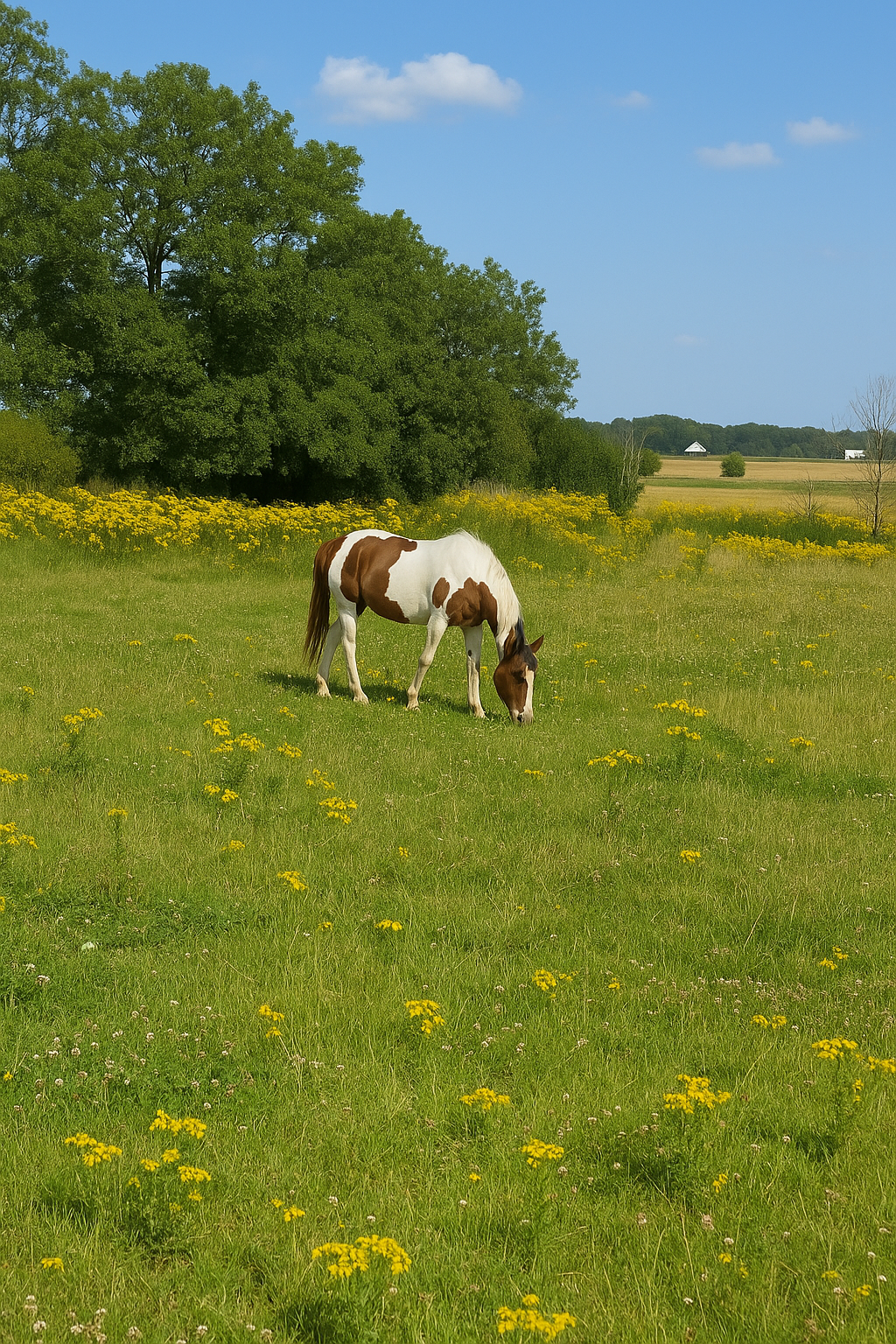
Source: EFSA Scientific Opinion on Pyrrolizidine alkaloids in food and feed (2017)
Is ragwort dangerous in hay and silage?
Yes. The toxin does not break down during drying or ensiling. If ragwort ends up in hay or silage, the forage remains toxic. If ragwort is found in bales, entire batches or the entire harvest may have to be discarded – it’s impossible to sort out the plant material afterwards. Authorities such as the Swedish Board of Agriculture (in Swedish) and DEFRA UK warn that even tiny amounts of ragwort can be deadly.
Sources: Swedish Board of Agriculture (in Swedish), DEFRA UK – Stop ragwort and other harmful weeds from spreading, EFSA (2017)
What are the symptoms of ragwort poisoning?
Symptoms often develop gradually, making diagnosis difficult. Common signs of pyrrolizidine alkaloid poisoning include:
- Lethargy, apathy and reduced performance
- Poor appetite and weight loss
- Dull coat and deteriorating coat quality
- Photosensitivity – sometimes causing skin reactions
- Neurological issues such as staggering or head pressing
In severe cases, poisoning leads to acute liver failure and death.
How to identify ragwort in pasture or fields
- Clusters of bright yellow flowers, usually blooming July–September
- Deeply lobed, dark green leaves
- Often grows in groups along roadsides, ditches, and neglected fields
The plant is easy to recognize when flowering – but much harder to detect in dried hay and silage.
How to remove ragwort
The most effective method is manual removal – especially in horse pastures and smaller areas:
- Pull the entire plant including the root – otherwise it will regrow.
- Wear gloves as the sap can irritate the skin.
- Dispose of plants in burnable waste – never compost (seeds can survive).
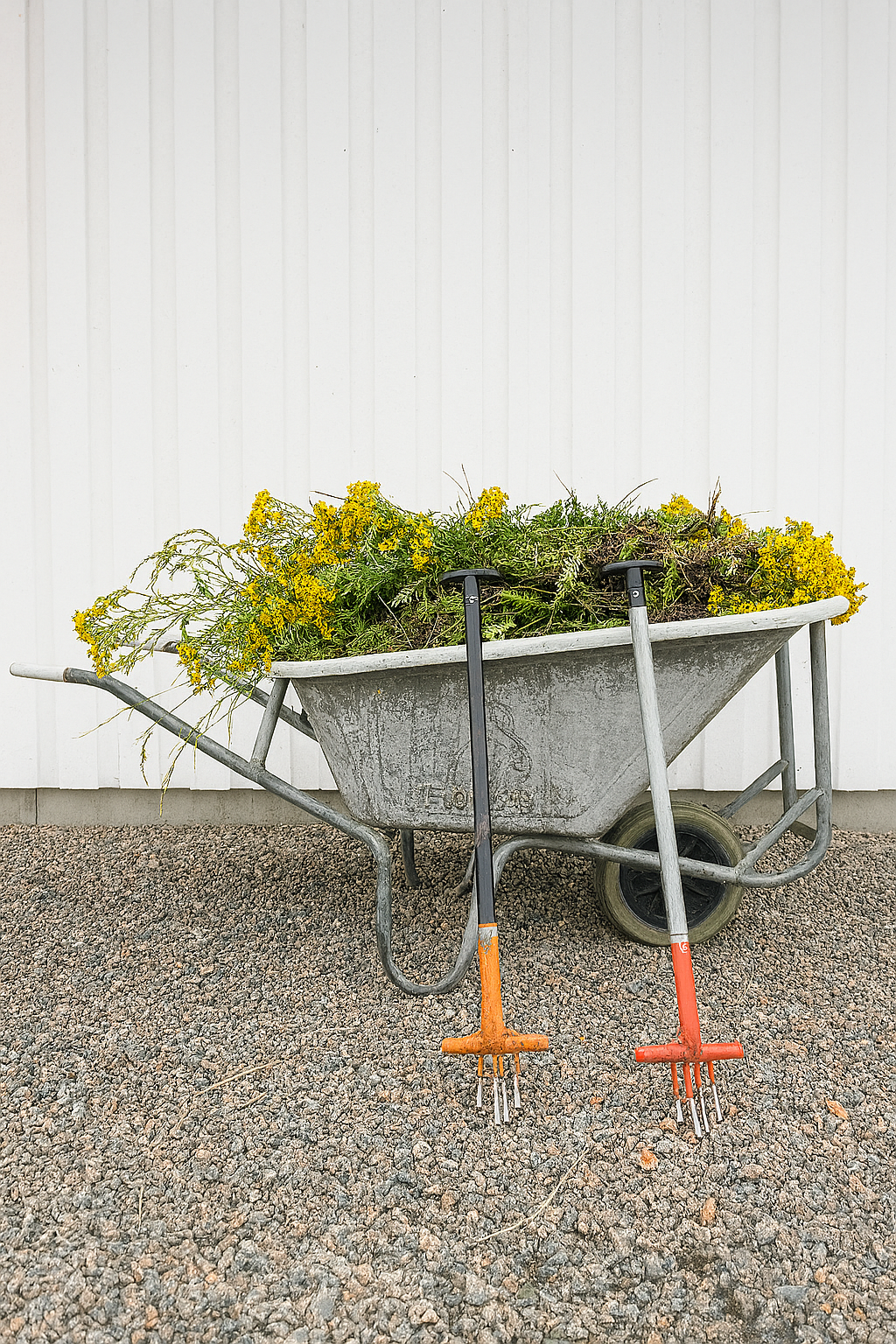
Tools such as narrow spades, weeding forks or root removers make the job easier. For larger areas, topping or mowing before flowering can prevent seed production.
What can you do as a horse owner?
- Inspect pastures regularly – especially in spring and summer.
- Check hay and silage carefully for foreign plant material.
- Educate others at your stable about the risks of ragwort.
- Report ragwort along roadsides to landowners or municipalities.
Taking action early can save horses – and entire forage batches.
FAQ about ragwort
Is ragwort poisonous to horses?
Yes. Ragwort contains pyrrolizidine alkaloids that damage the liver and can cause fatal poisoning.
Is ragwort still dangerous when dried in hay or silage?
Yes. The toxin survives drying and ensiling – hay or silage containing ragwort may need to be discarded.
What is the best way to remove ragwort?
Pull the plant out by hand or with tools, make sure the root comes out, and dispose of it in burnable waste.
Quick facts
- Scientific name: Jacobaea vulgaris
- Former name: Senecio jacobaea
- Toxin: Pyrrolizidine alkaloids (PA)
- Effect: Chronic liver damage – can be fatal
- Toxic when dried: Yes – toxin remains in hay and silage
- Impact: If ragwort is found in forage, the entire harvest may need to be discarded